
The Impact of International Teachers on Student Outcomes and School Culture

Today’s students are growing up in a world that’s more interconnected than ever before. The ability to collaborate across cultures, communicate with people from different backgrounds, and think beyond one’s own frame of reference are no longer nice-to-have skills—they’re essential ones. Despite increasing globalization, U.S. primary and secondary schools can often feel like they’re in their own little bubble, learning about history, science, and art from various cultures, but without any direct connections to the subjects at hand. That’s where J-1 Teachers come in.
Welcoming an international teacher through the J-1 Teacher Exchange Program introduces a new perspective to your school, one that engages students in new ways and becomes a living example of the global community students are learning about and will one day enter. Hosting a J-1 Teacher is an ideal way to prepare students for the future and give them a leg up that’s both culturally and academically enriching.
Discover how hosting a J-1 teacher can inspire global learning and improve academic outcomes schoolwide.
A Faculty That Reflects the World
A faculty made up of educators who come from a variety of backgrounds shapes the entire culture of a school. When an international teacher joins a school community, they bring inherent cross-cultural awareness, forged by the experiences of navigating life in a foreign country. That quality strengthens the school environment at every level: for students, parents, and fellow educators. Schools with international faculty tend to be more welcoming to students and families from various ethnic and cultural backgrounds and better equipped to meet their needs.
Additionally, students who are in more inclusive environments demonstrate stronger social awareness, greater empathy toward peers from different backgrounds, and higher engagement overall. By simply welcoming more international faculty, your school is teaching children how to get along with others, no matter their differences.
Encourage Intercultural Validation & Curiosity
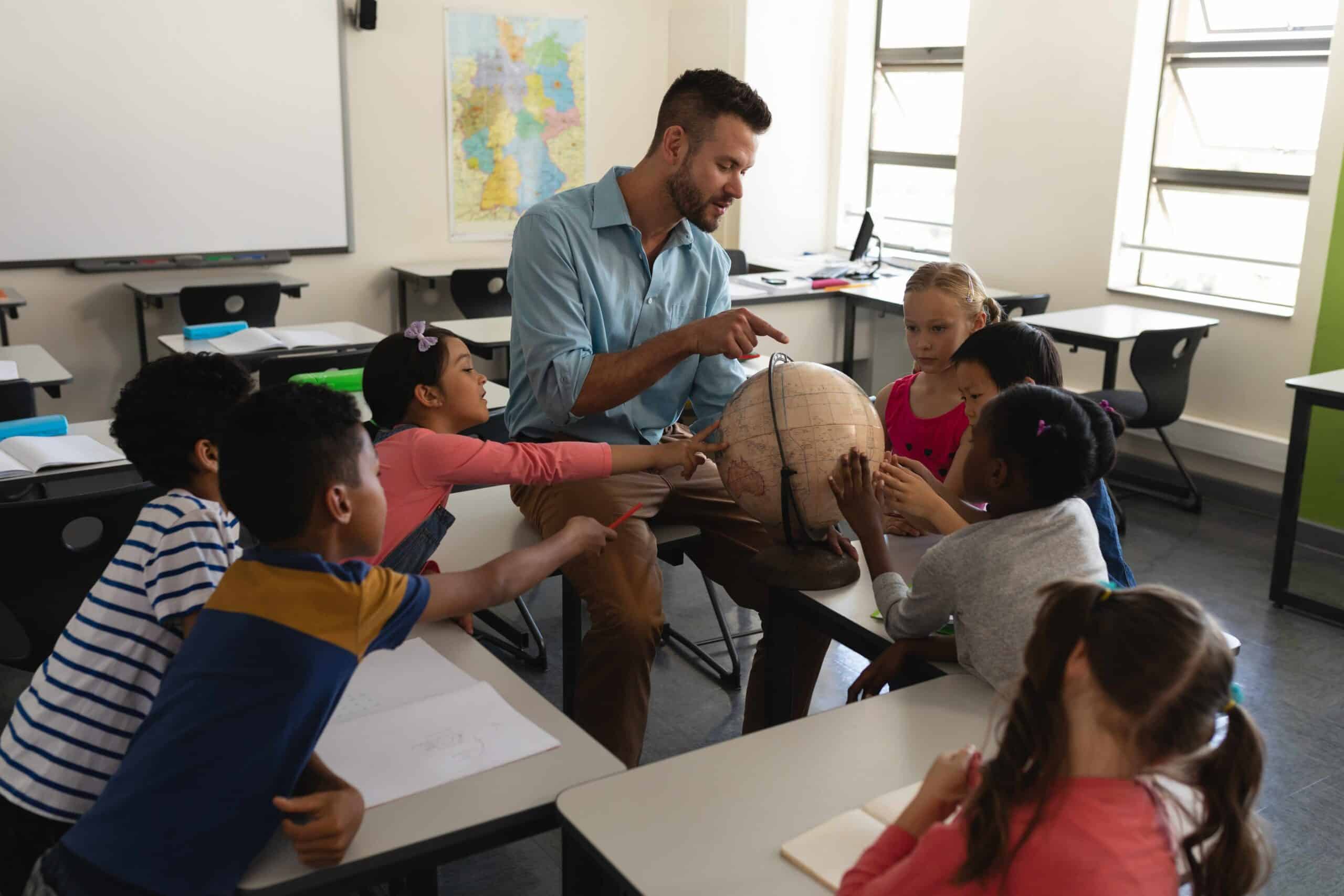
When a U.S. school hires an international teacher, learning comes from more than just textbooks and traditional curricula. Students gain firsthand exposure to new accents, languages, cultural perspectives, teaching styles, and worldviews—often for the first time. Minority students may find that having an international teacher further validates their own unique heritage, especially in a school with a largely homogenous student body or faculty.
And for students with limited exposure to other cultures, learning alongside an international teacher can lay the groundwork for something deeper. Curiosity about a teacher’s background naturally extends to the language they speak, the history and literature of their home country, and the broader world it represents. As many educators have witnessed firsthand, a genuine curiosity like that can easily snowball—inspiring an interest in cooking traditional foods, researching future study abroad or exchange programs, taking up a second (or third) language, or thinking about a future career with an international dimension. It’s the kind of real-world impact that only comes from person-to-person connection.
Enriching Cross-Cultural Activities
In addition to the intercultural learning that happens on a daily basis when schools welcome a J-1 teacher, there are also two structured cross-cultural activities that naturally weave cultural exchange and international learning into the school curriculum.
Every J-1 Teacher program requires the international educator to lead two cross-cultural activities annually. The first introduces the culture of their home country to their classroom and school community. The second should facilitate dialogue between U.S. students and peers from their home country. For schools, this guarantees meaningful international programming at no additional cost and with no extra planning burden on faculty or administrators.
The Power of Language Exposure
Even in non-language classrooms, students regularly encounter new accents, expressions, and ways of constructing thought, broadening their linguistic awareness in ways that support literacy development and communication skills. For schools with language programs, a J-1 Teacher who is a native speaker of another language can be a particularly powerful presence, offering students authentic cultural and linguistic context that no curriculum alone can provide.
Additionally, schools that have a high proportion of bilingual students can benefit greatly by having a teacher who speaks both of their languages. Multilingual J-1 Teachers can help students feel more at home, more understood, and ensure clear communication with parents who don’t speak English fluently.
Fresh Teaching Methods, Stronger Student Engagement
Every country and region in the world has its own unique teaching practices. International teachers bring instructional approaches shaped by entirely different education systems: distinct problem-solving methods, new ways of structuring lessons, and fresh ideas for inspiring student participation. Exposure to new teaching strategies challenges students to think differently, often resulting in reenergized classrooms that spark greater engagement with course material.
Research supports this idea. A 2019 study published in Education Planning found that instructors with international teaching experience transferred their cross-cultural knowledge directly into their U.S. classrooms, enhancing the learning journey for students. The same study found that internationally experienced teachers were more likely to integrate culturally responsive pedagogy—an increasingly important skill as districts across the country become more global.
Expanding and Strengthening Your Academic Programs
In addition to teaching methodology, J-1 Teachers bring certified subject-area expertise that can both strengthen existing programs and expand what your school is able to offer. Many international educators are credentialed in fields that are among the most sought-after in U.S. classrooms, including STEM disciplines, foreign languages, bilingual education, and special education. In subject areas where finding qualified candidates may be challenging, a J-1 Teacher with the right background ensures students have access to a knowledgeable, fully certified educator in the subjects that matter most to their academic development.
For schools seeking to introduce new courses or bring greater depth to specific programs, the right J-1 Teacher can make that possible too.
Increased Teacher Capacity = Better Outcomes for Students
Welcoming international educators is also a great way to increase teaching capacity and support local teachers who are struggling to keep up with their workloads. As school administrators know, when a teacher is stretched too thin, it can be difficult to provide a level of attention and dedication to their students that every child deserves.
When local teachers are supported by international educators, everyone benefits.
At a Glance: What J-1 Teachers Bring to Your Classrooms
| For Students | For Faculty & School Culture |
| Diverse classrooms and exposure to new cultures, languages, and perspectives | Cross-cultural dialogue and shared professional learning |
| Fresh teaching methods that boost engagement | A more inclusive, internationally minded school environment |
| Development of global competence and communication skills | Greater empathy and awareness when working with diverse families |
| Inspiration to explore the world and cultures beyond their community | A faculty that better reflects the diversity of the wider world |
| Access to qualified instruction in high-demand subject areas | Expanded course offerings and stronger academic programming |
| Structured cross-cultural activities | Reduced workload pressure through increased teaching capacity |
Building Skills for the Future
Regardless of whether your school teaches kindergarten or high school, it’s never too early to prepare children for life beyond the classroom. International education naturally teaches children to work alongside people from different backgrounds, to communicate across cultural differences, and to approach unfamiliar situations with curiosity rather than discomfort. International teachers model all of these qualities simply by showing up to the first bell.
Plus, when students interact daily with an educator from abroad, they begin to develop a broader sense of the world and of their role in it. Those experiences build the kind of global competence that allows young people to thrive in a globalized world, and later, in an increasingly international workforce.
The Benefits of International Teachers for Faculty
While the student experience is the primary focus of the J-1 Teacher Exchange Program, it’s worth noting that international teachers enrich the broader school community as well. Colleagues gain a peer with a different personal and professional background, opening doors to cross-cultural dialogue and shared learning that strengthens the whole faculty. Beyond the classroom, many international teachers become active members of the school community—supporting extracurricular activities, starting clubs, and creating additional opportunities for student and faculty engagement. With multi-year placements, they also provide added continuity in classrooms where turnover can be a challenge.
Schools that embrace global teachers tend to cultivate more inclusive and internationally minded environments, which benefit everyone within them.
Discover all the benefits of hosting a J-1 Teacher with AIFS Professional Pathways.
The benefits of international teachers in U.S. classrooms are real, measurable, and far-reaching. They spark students’ interest in the world and introduce fresh instructional approaches, all while building the cultural competence students need to thrive in a globalized world. The consensus is clear: hosting a J-1 Teacher is one of the most meaningful and valuable investments your school can make.
AIFS Professional Pathways makes the process of bringing a J-1 Teacher to your school in the U.S. straightforward. We expertly and efficiently handle visa sponsorship, compliance, issuance of federal forms, and program administration so you can host an international teacher with confidence and ease.
AIFS Professional Pathways
AIFS Professional Pathways administers J-1 visa sponsorship for international Interns, Trainees, and Teachers pursing professional opportunities with multi-sector businesses and K-12 schools across the U.S. This division of AIFS supports U.S. companies, immigration firms, universities, partners, students, and professionals at all levels.